
How Iran-Israel-US Conflict Impacts Indian Auto Sector
Rising crude prices, gas shortages, and a potential chip crisis. The Middle East conflict is creating a perfect storm for Indian auto. Can the industry survive?


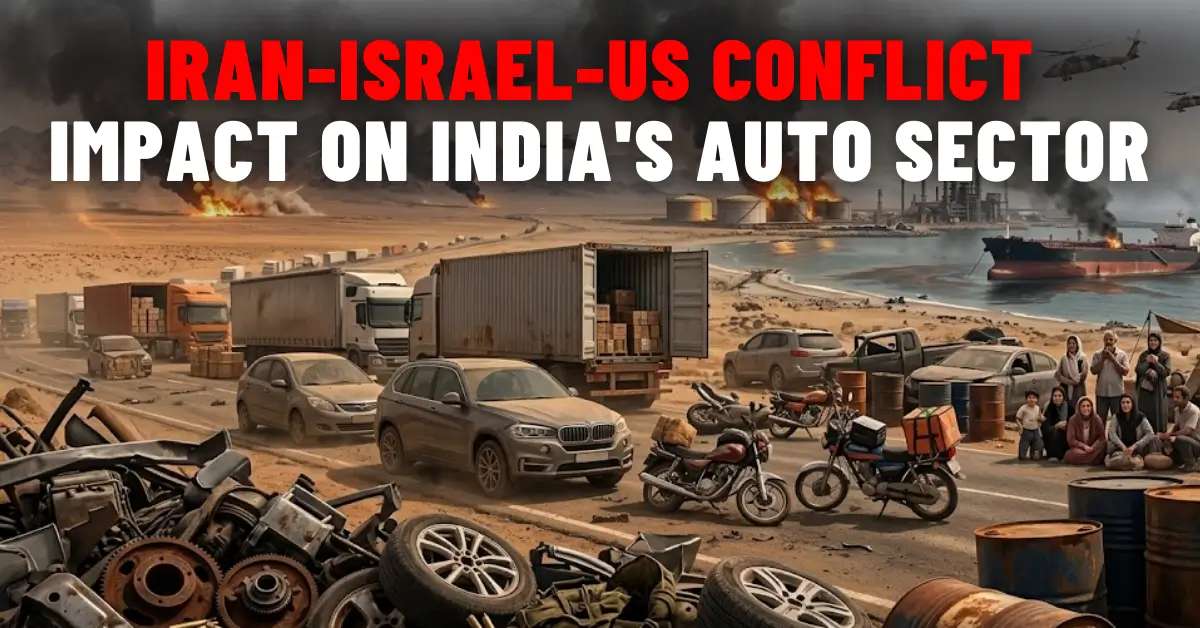
The escalating Iran-Israel-US conflict is sending shockwaves through the global economy. For India's auto sector, the impact could be severe and multi-layered.
From fuel prices to supply chains, here is how the crisis threatens to disrupt the industry.
Fuel Prices and Consumer Demand
Crude oil prices have already crossed $100 per barrel. They could skyrocket to $150 if the conflict worsens. Higher fuel prices directly hit consumer wallets. Petrol and diesel become more expensive. This forces households to tighten budgets.
The big question is whether families will prioritise buying a car or two-wheeler. With inflation rising, mobility purchases often get deferred.
Auto stocks are already feeling the heat. The Nifty Auto index has crashed around 12% in the past month. Maruti, M&M, and Tata Motors shares have declined nearly 15%.
The Gig Economy Connection
Two-wheeler sales face a unique threat. Delivery workers for Zomato and Swiggy form a critical customer segment. If the cooking gas crisis forces restaurants to shut down, orders will dry up. Thousands of delivery riders could lose their jobs.
No income means no new bike purchases. This could significantly dent two-wheeler demand across the country.
Production Disruptions Loom
Natural gas shortages are already a concern. India imports a significant portion of its LNG from Qatar.
Gas is essential for auto manufacturing. Paint shops, furnaces, and heat treatment processes rely heavily on it. Switching to electricity is not immediately possible without machinery changes.
Tata Motors' Sanand plant is reportedly facing severe gas shortages. Production may need to be cut by up to 50%.
Semiconductor Nightmare Returns
The conflict threatens a renewed chip crisis. Helium, a key input for semiconductor production, faces supply disruptions.
India imports most of its helium. Shortages could affect semiconductor manufacturing globally. This would hit auto production hard, just as the industry was recovering from the last shortage.
Export Markets at Risk
Vehicle shipments to the Middle East have effectively stopped. Ships are anchored near the Red Sea or turning back. Freight and insurance costs are rising sharply. This puts pressure on margins for exporters.
Maruti Suzuki says the Middle East accounts for only 12.5% of its exports. But other manufacturers have higher exposure. The impact will vary across companies.
Raw Material Cost Pressures
Crude oil derivatives are used in tyres, plastics, and paints. Rising oil prices increase production costs across the board.
Metal prices are also under pressure. Higher energy costs affect mining, smelting, and transportation. Margins will compress if companies cannot pass on costs to customers.
A Question of Resilience
The auto industry was riding high on GST cuts and strong demand. Now it faces a perfect storm of challenges. The critical question is how long the conflict lasts. Short-term disruptions can be managed. A prolonged war could trigger a full-blown slowdown.
India's auto sector has shown resilience before. But this time, the threats are coming from multiple directions. Fuel prices, supply chains, exports, and consumer demand are all under pressure.
The coming weeks will reveal just how deep the impact goes. For now, the auto industry watches and waits.
About the Author

Bharat Rana shares practical insights on cars, ownership, and the latest updates to help readers make informed decisions.