
3 Reasons Why Mahindra XUV400 Might Be Discontinued in 2026
Once a strong EV contender, now lags behind its rivals


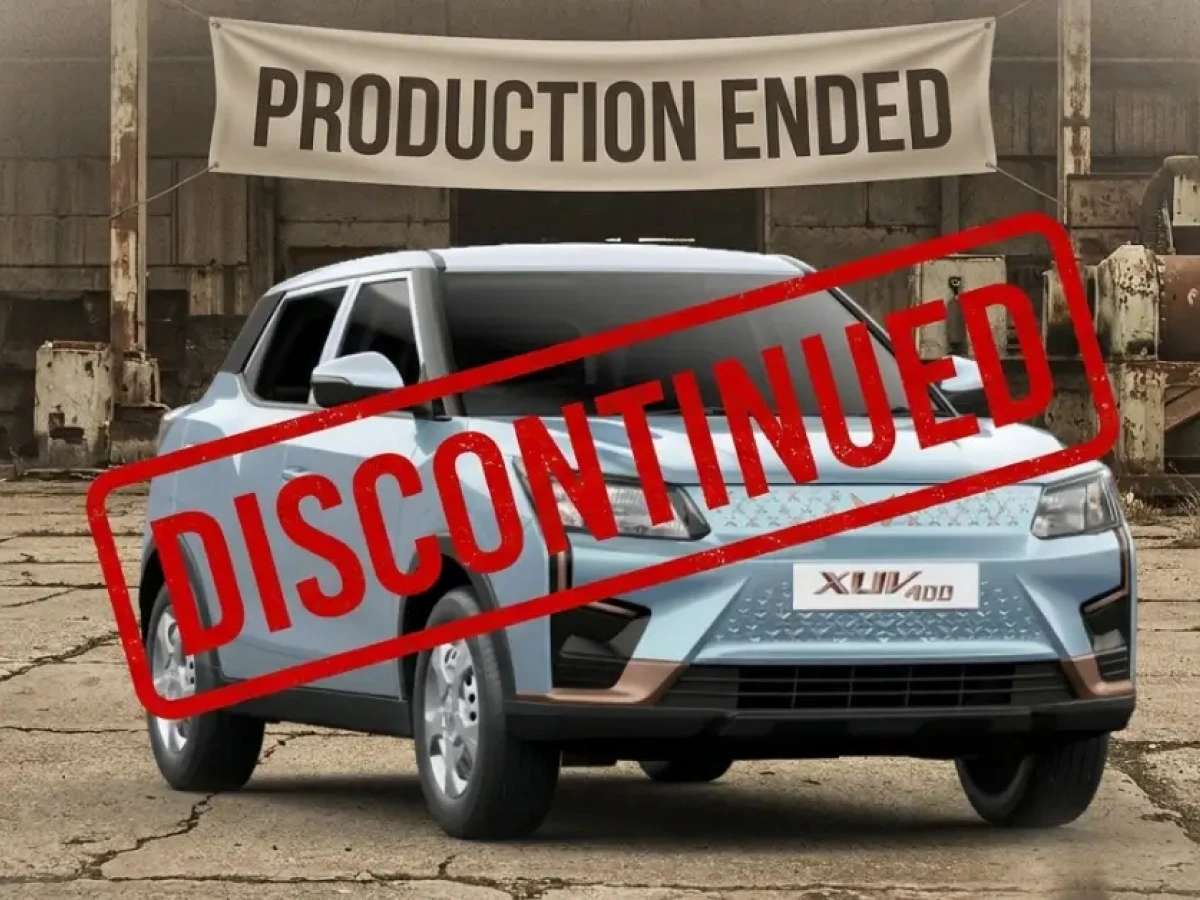
Mahindra XUV 400 came in the market in 2023. It was a facelifted electric version of XUV 300 (which was discontinued in 2022). At the time of its launch, the XUV 400 was being considered a market dominator. Mahindra too, had projected to sell 40,000 XUV 400 in that launch year.
But soon, the script flipped. If we talk about present, in March 2026, only 117 Mahindra XUV 400 were sold. And to put it into context, rivals like MG Windsor sold over 2,600 units in the same month.
So, what's the reason? How once a probable market dominator is now struggling to sell even fewer units a month than what its competitors sell in a day?
How Mahindra XUV 400 Downfall Started?
The hype of Mahindra XUV 400 being a market-dominating car wasn't built on fuss. After its launch in March 2023 to March 2024, approx 14,000 Mahindra XUV 400 were sold. And this number is quite decent for a newly launched car in its first launch year.
The real struggle for Mahindra XUV 400 started in the last fiscal year. From April 2025 to March 2026, only 3,200 units could be sold. And by looking at these numbers, one can easily say that the adoption of the XUV 400 isn't taking off. So, let's explore the top 3 REAL reasons why Mahindra XUV 400 EV is struggling.
Reasons Why Mahindra XUV 400 is Struggling in EV Market
1. Competition That is Miles Ahead
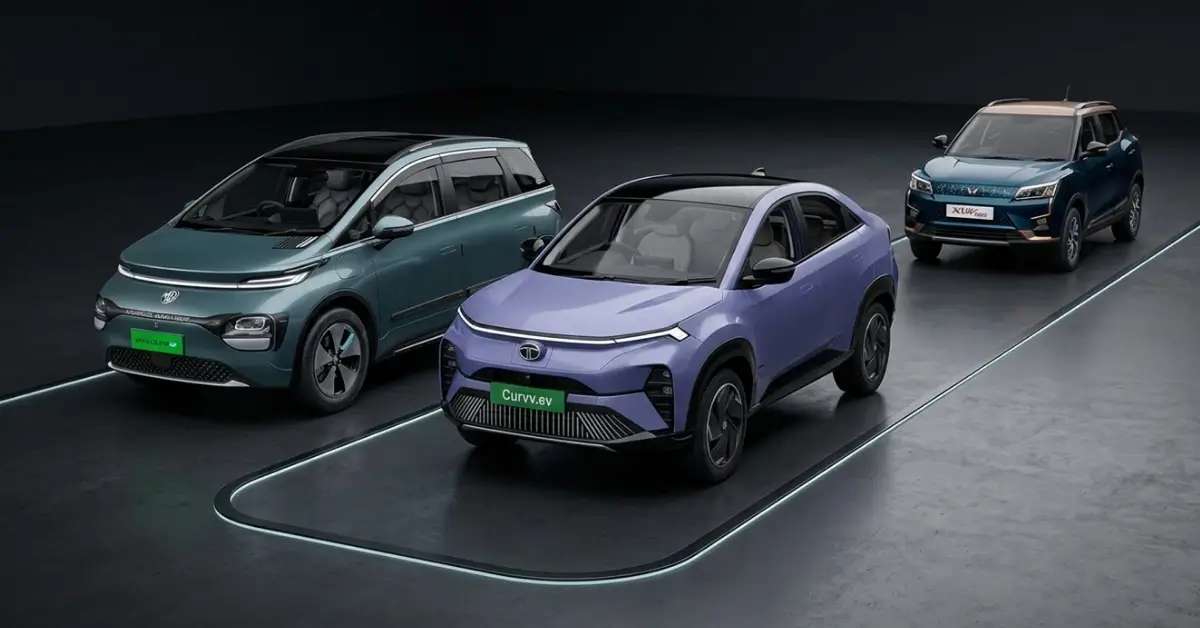
When XUV 400 was launched, it really offered some segment first features like fastest acceleration, bigger cabin size, driving modes and all. But soon it became really standard as new cars started offering better features even at a lower price than the XUV 400 EV.
The Pricing Ghost
On price, the Tata Nexon EV starts at ₹12.49 lakh. The XUV 400 starts at ₹15.49 lakh. That is a ₹3 lakh gap right at the entry level. And when most Indian buyers are making their first EV purchase, that gap is not small. It is a deal-breaker.
And MG Windsor took this even further. With its Battery-as-a-Service model, you can drive the Windsor home for ₹9.99 lakh and simply pay ₹3.5 per kilometre for battery usage. That means the Windsor enters a mental price bracket that the XUV 400 cannot even compete in. Windsor sold 46,735 units in 2025 alone. The XUV 400 managed around 1,040 units in the last 6 months combined.
Future Proof Features by Competitors
Now on features. The Tata Curvv EV offers a 55kWh battery with a claimed range of 502km. The XUV 400's larger battery pack claims 456km. That is a 46km gap in range, and buyers notice it. The Curvv EV also comes with a coupe-SUV design that looks genuinely fresh. At ₹17.49 lakh, it costs more than the XUV 400 but buyers are choosing it anyway. Because the value feels right.
And the Nexon EV? It got a 5-star BNCAP safety rating on its long-range variant. That matters to families. It also offers a 45kWh battery with up to 489km of claimed range. Again ahead of XUV 400's offering, all at a lower starting price.
So no matter which angle you look at, Mahindra XUV 400 has a stronger competitor blocking its path.
2. Mahindra Itself Has Better EV Cars Than the XUV 400 EV
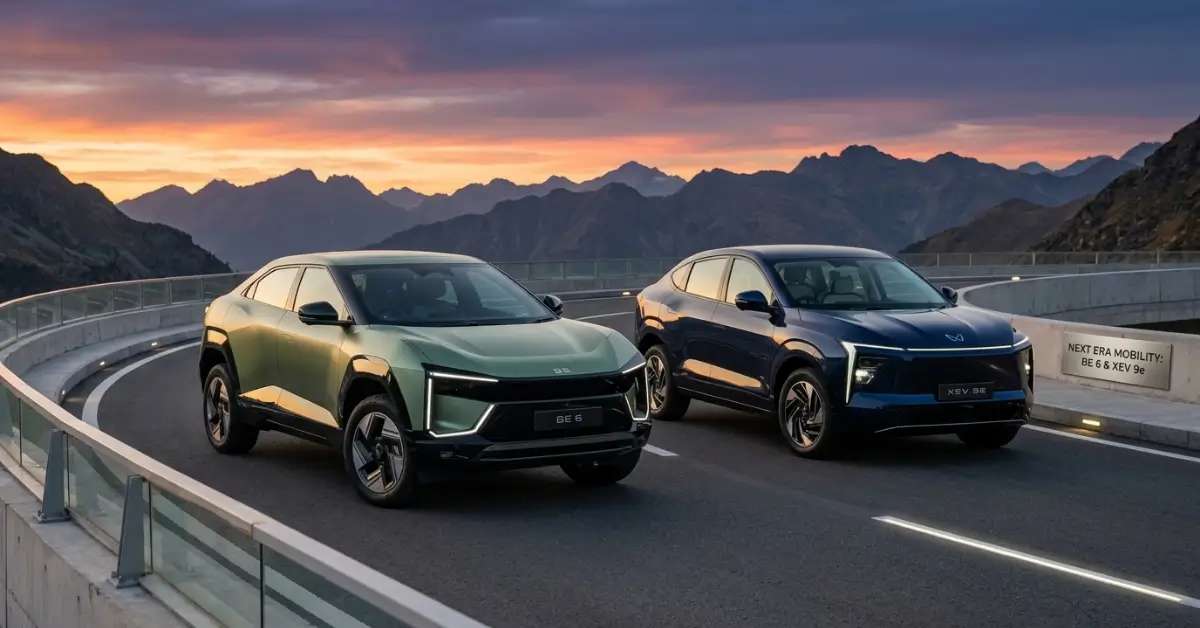
Here is the twist that YOU might not be expecting. The biggest competitor of the XUV 400 might not be Tata or MG. It’s Mahindra itself.
In early 2025, Mahindra launched the BE 6 (starting at ₹18.90 lakh) and the XEV 9e (starting at ₹21.90 lakh). These are not updated versions of old ICE platforms. These are born-electric cars, built from scratch on a dedicated EV architecture.
Think about what that means for the buyer. The BE 6 comes with dual 12.3-inch screens, a Harman Kardon 16-speaker audio system, Level 2 ADAS, OTA updates, and a claimed range of up to 682km. The XUV 400 (by comparison) runs on a modified XUV 300 platform that was originally built for petrol and diesel engines. It has no ADAS, no OTA updates and no significant upgrade since a minor feature addition in 2023.
When a buyer walks into a Mahindra showroom today, the choice between the XUV 400 and the BE 6 is not a close one. One feels like the future. And the other feels like the past.
And the numbers prove it too. In the first 10 months of FY2026, the BE 6 and XEV 9e together sold over 37,000 units. In the same period, the Mahindra XUV 400 sold just 381 units. Mahindra's own customers voted and they chose the newer EVs by a margin of nearly 100 to 1.
3. No Update, No Urgency : No Reason to Buy
This is the reason that does not make headlines but quietly kills a product.
The Mahindra XUV 400 has received no meaningful update since August 2023. That update added a few features like cruise control, ESP, and fog lamps — the kind of things most competitors offered as standard years ago. There has been no battery improvement, no range upgrade, no new technology, no facelift, and no price correction by Mahindra.
Meanwhile, the world around it kept moving. Tata launched the Curvv EV, Harrier EV and will be launching Tata Sierra EV on 19 May 2026. MG launched the Windsor. Mahindra launched the BE 6 and XEV 9e. Hyundai brought in the Creta Electric. Buyers today have more EV options than ever at every price point.
When a product does not evolve, buyers do not wait for it. They simply move on.
What Do the Sales Numbers Say?
Here is the last 6 months sales data of Mahindra XUV 400 and its key rivals:
|
Month |
XUV 400 |
MG Windsor |
Tata Nexon EV |
Tata Punch EV |
|
Oct 2025 |
152 |
~4,100 |
~2,100 |
~1,500 |
|
Nov 2025 |
404 |
~4,000 |
~2,000 |
~1,400 |
|
Dec 2025 |
59 |
~4,000 |
~1,900 |
~1,400 |
|
Jan 2026 |
146 |
~4,600 |
~2,200 |
~1,500 |
|
Feb 2026 |
162 |
~3,800 |
~2,000 |
~1,400 |
|
Mar 2026 |
117 |
~2,600 |
~1,900 |
~1,300 |
Conclusion
Looking at the struggle of the Mahindra XUV 400 EV, one thing that can be vouched for is that the EV car market is no longer just a niche market. It's more than that.
It is a full-scale competitive battlefield where pricing, range, features, and freshness all matter simultaneously. And the Mahindra XUV 400 is losing on almost every front.
The competition undercut it on price. Mahindra's own newer EVs made it feel outdated. And the lack of any meaningful update told buyers that this car had no future roadmap worth waiting for.
The XUV 400 was not a bad car when it launched. It was actually a decent first attempt by Mahindra at a mass-market EV. It had the basics in place. But a "decent first attempt" is not a reason to buy a car in 2026.
Here is the key takeaway: the EV market does not reward cars that stand still. It rewards cars that keep getting better. The XUV 400 stopped getting better two years ago. And the sales data is simply reflecting that reality.
If Mahindra wants to stay relevant in the mass-market EV space below ₹20 lakh, the answer is not the XUV 400. It is the XUV 3XO EV, which is expected to replace it. Until then, the XUV 400 is a car that is fading out. Not because it was bad, but because everything else moved forward and it did not.
About the Author

Bharat Rana shares practical insights on cars, ownership, and the latest updates to help readers make informed decisions.