



Full expert breakdown
Most "sporty" versions of ordinary cars in India are a body kit, a red badge and a price hike. So when I drove the Creta N Line, the one answer I needed was simple: does anything actually change beneath the stickers?
Some of it does, and more than I expected. The steering is genuinely quicker, the brakes are a real upgrade — discs on all four wheels where the standard Creta makes do with rear drums, and the suspension is properly retuned rather than just lowered.
But there's a catch, and it's the one thing that would stop me recommending this car to half the people who ask about it. Let’s get into it.
Hyundai Creta N Line Price and Variants in 2026
Hyundai Creta N Line price now starts at ₹19.03 lakh and tops out at ₹20.10 lakh ex-showroom. The Creta N Line on road price works out to roughly ₹22.5 lakh to ₹24 lakh depending on your city's RTO and insurance.
Here's the important change: Hyundai discontinued the entry-level N8 variant in June 2026. The Creta N Line is now N10-only, sold in four combinations — manual, manual dual-tone, DCT, and DCT dual-tone. If a listing still shows you an N8 at ₹17.83 lakh, that's stale data.
Which Creta N Line variant should you buy?
With the N8 variant being discontinued, the decision is now simpler, and it comes down to gearbox. The manual at ₹19.03 lakh is the enthusiast's choice and ₹92,000 cheaper. The DCT at ₹19.95 lakh is the one most buyers take.
My advice: if you live in a smaller city with light traffic, take the manual — the shift is decent and it's the more involving car. If your commute is Bengaluru or Mumbai peak hour, take the DCT and don't look back. Dual-tone paint costs about ₹15,000 and is worth it purely for resale.
Creta N Line vs Creta: What Actually Changes?
This is the question I get asked most, so let me be specific rather than vague.
What genuinely changes: disc brakes on all four wheels instead of rear drums, stiffer springs and dampers, a quicker steering rack with more weight in Sport mode, 18-inch alloys instead of 17s, a dual-tip exhaust, and the option of a 6-speed manual with the turbo engine — something the regular Creta doesn't offer with this motor.
What doesn't change: the engine output. This is the part buyers get wrong. The Creta N Line makes 158 bhp and 253 Nm — exactly the same as the standard Creta 1.5 turbo. There is no power upgrade. You are paying for chassis, brakes and cosmetics, not speed.
So is the Creta N Line better than the Creta? If you drive yourself and enjoy it, yes — the brakes alone justify a chunk of the difference, and the steering makes it a more satisfying car on a good road. If your family sits in the back and comfort matters more than corner speed, the standard Creta is the better buy and it's cheaper. That's not a cop-out; the two cars genuinely suit different owners.
Hyundai Creta N Line Engine and Performance
The Creta N Line engine is Hyundai's 1.5-litre T-GDi turbo-petrol, 1,482 cc, making 158 bhp and 253 Nm from 1,500 to 3,500 rpm. It drives the front wheels through either a 6-speed manual or a 7-speed dual-clutch automatic.
The mid-range is the best part. Between 2,000 and 4,000 rpm there's a genuine surge, and overtaking on a two-lane highway needs no planning at all — you just squeeze the throttle. The DCT shifts crisply and the paddle shifters actually respond, which not every DCT in this class manages.
Three drive modes: Eco, Normal and Sport. Sport adds weight to the steering and sharpens the throttle, and unlike a lot of cars where drive modes are theatre, here you can feel it.
The weak spot is off the line. From a standstill in Eco mode there's a genuine hesitation before the turbo comes in, and in stop-start traffic that lag gets tiring. Leave it in Normal. Independent tests put 0-100 kmph in the region of 9 to 10 seconds — quick for the segment, but this was never a genuinely fast car.
Hyundai Creta N Line Mileage: Claimed vs Real World
The claimed Creta N Line mileage is 18 kmpl for the manual and 18.2 kmpl for the DCT under ARAI testing.
Real ownership numbers are a long way off that. Owners consistently report 10 to 11 kmpl in city driving with the AC on, and around 15 kmpl on the highway.
I want to be blunt about this because it's the number that surprises people after purchase. A turbo-petrol that you enjoy driving will not return 18 kmpl, and the more you enjoy it the worse it gets. With a 50-litre tank, plan on roughly 500 km of real city range per fill. If your monthly running is above 1,500 km, do the fuel maths before you sign — there is no diesel, no CNG and no hybrid option here.
Hyundai Creta N Line Design and Colours
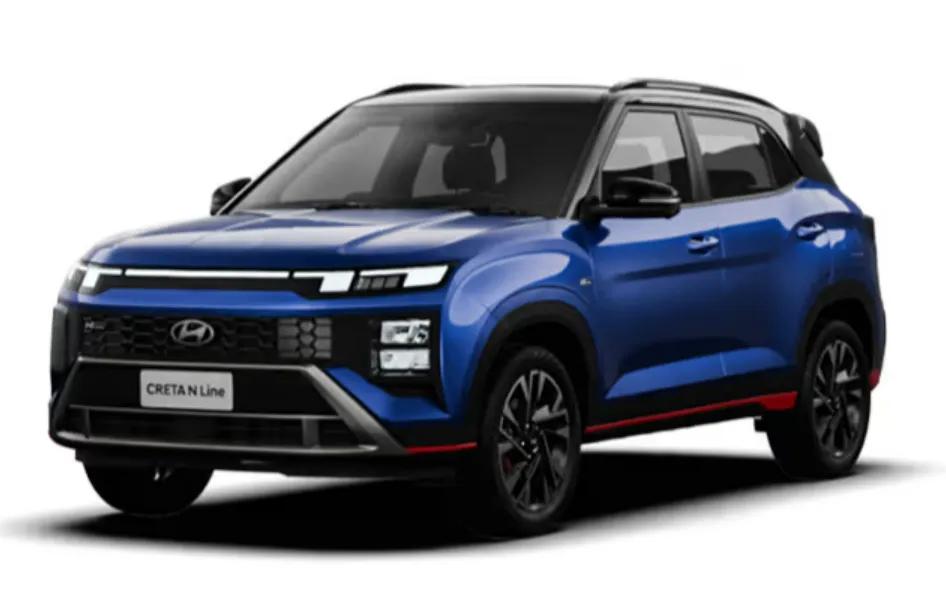
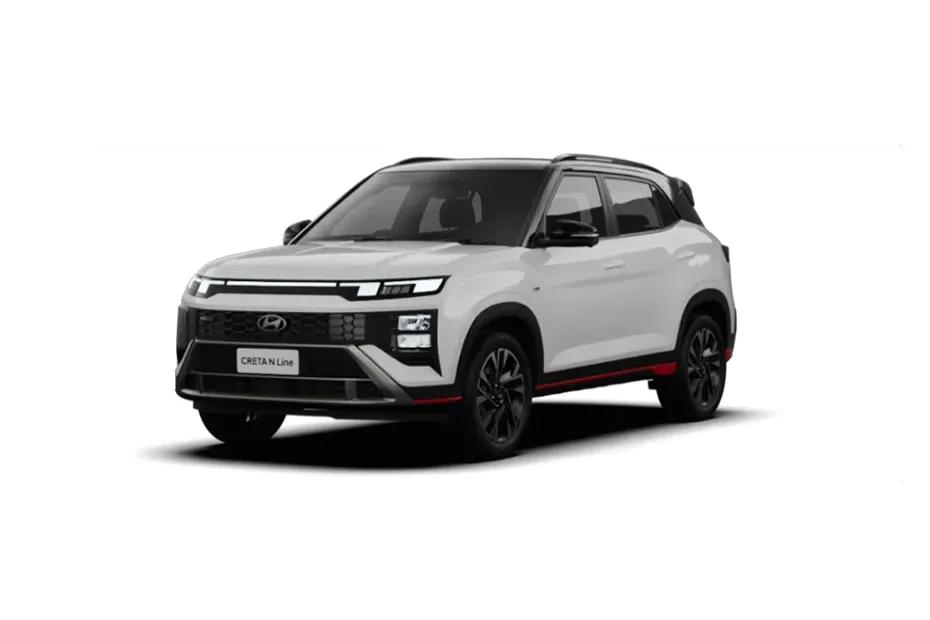
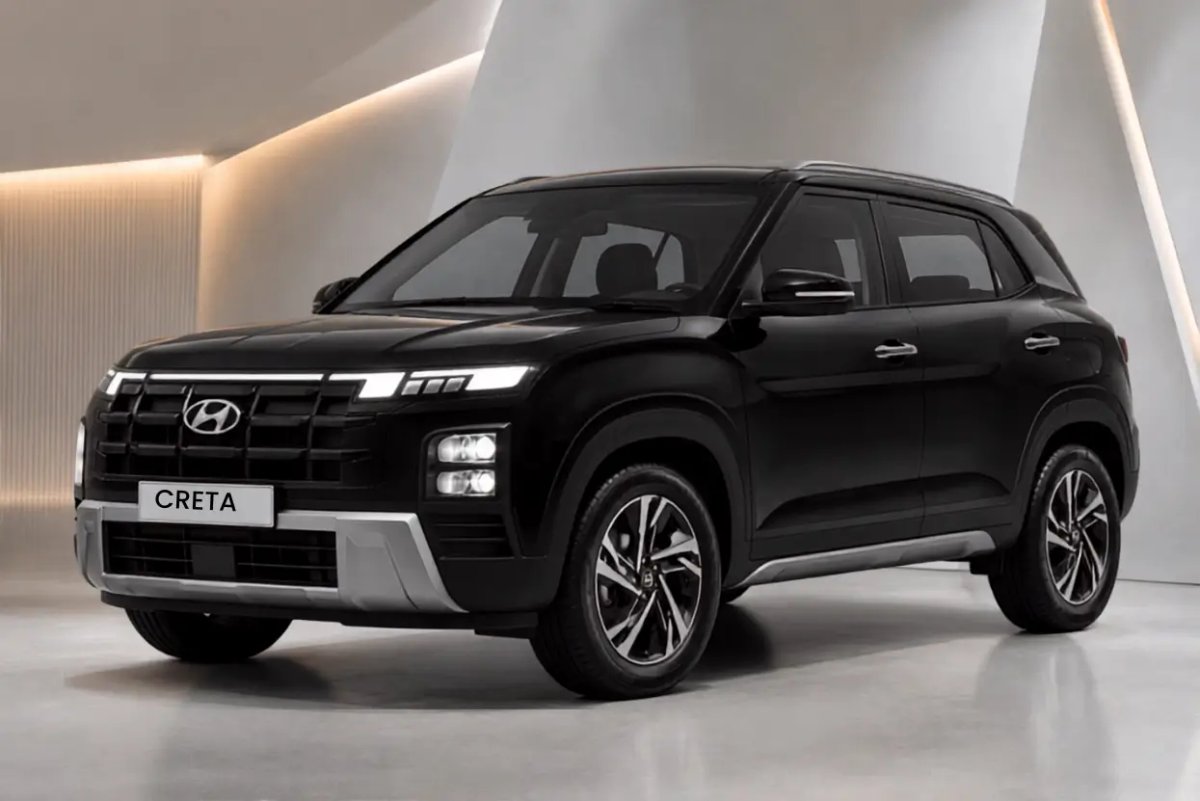
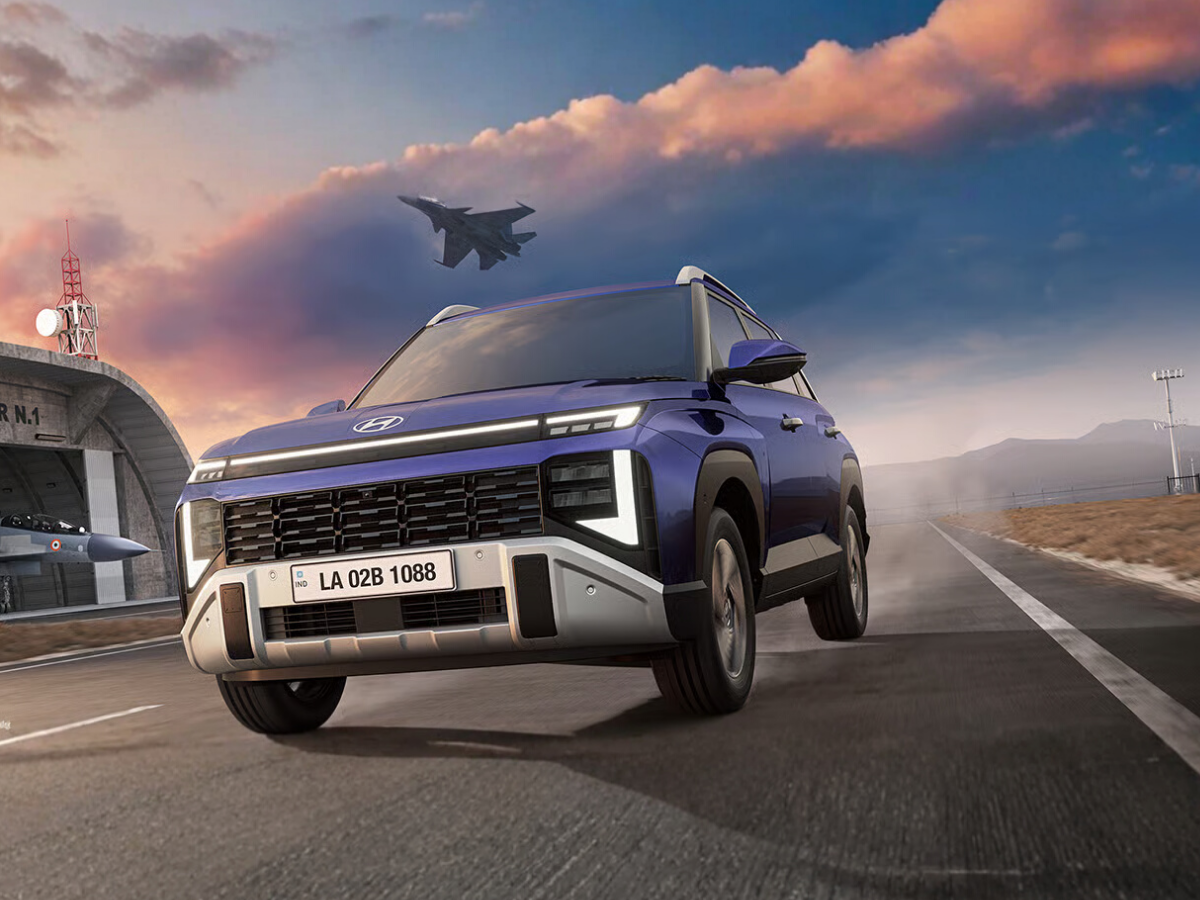
The N Line treatment is more restrained than the name suggests, and I think it works. Up front there's a reworked grille with red highlights, quad-beam LED headlights and Hyundai's horizon LED positioning lamp running across the nose. At the rear you get a spoiler and a dual-tip exhaust that's actually connected to the exhaust rather than being a plastic decoration.
The 18-inch diamond-cut alloys with the N logo and the red brake callipers behind them are the details that sell this car in the showroom. There's also a shark-fin antenna and, on dual-tone versions, an Abyss Black roof.
Creta N Line colours run to five body shades — Atlas White, Abyss Black, Titan Grey Matte, Shadow Grey and Thunder Blue — with dual-tone Abyss Black roof options on most. A word on Titan Grey Matte: it looks superb and it is genuinely harder to live with. Matte paint can't be machine-polished, swirl marks are permanent, and bird droppings need removing quickly. Budget for ceramic coating or pick a gloss shade.
Hyundai Creta N Line Interior and Features
The Creta N Line interior gets an all-black treatment with red stitching on the seats and steering, red ambient lighting, leatherette upholstery with the N logo, metal pedals and N-branded steering wheel and gear lever. It reads sporty without being juvenile.
Feature highlights are strong: twin 10.25-inch displays for infotainment and instruments, a voice-enabled panoramic sunroof, an eight-speaker Bose system that's genuinely good, dual-zone automatic climate control, ventilated front seats, an eight-way powered driver's seat, wireless charging, and Bluelink connected car tech with over 70 features plus a year of JioSaavn.
The complaints are minor. There aren't enough shortcut buttons around the touchscreen, so some functions need two or three taps while you're driving. And with the N8 gone you no longer have to worry about the cheaper trim's lower-grade materials — the N10 cabin is the good one.
Hyundai Creta N Line Safety and ADAS
Six airbags are standard, along with ESC, hill-start assist, vehicle stability management and disc brakes on all four wheels. The braking deserves a specific mention — under hard stops this car settles and stops straight in a way the drum-braked Creta doesn't.
The ADAS package covers Level 2 functions across 21 features: forward collision avoidance assist, lane-keeping assist, blind-spot collision avoidance, smart cruise control and more. There's also a surround-view monitor, a blind-spot view monitor that projects a camera feed into the cluster when you indicate, and a built-in dashcam.
Two honest caveats. First, the ADAS is over-sensitive in dense Indian traffic — owners in cities like Bengaluru report simply switching active assistance off, which I understand completely. Second, and more importantly: the Creta N Line has not been crash tested. No Global NCAP or Bharat NCAP rating exists. Rivals like the Skoda Kushaq and Volkswagen Taigun carry 5-star Global NCAP results. If a published crash rating is part of how you choose a car, that's a real gap.
Ride, Handling and the One Real Catch
Here's the catch I mentioned at the start.
The firmer suspension does what Hyundai promised. Body roll is noticeably reduced, the car stays flat through fast corners, and at 100 kmph it feels more planted than a standard Creta. On a good road it's genuinely enjoyable.
But that same firmness makes the low-speed ride harder. Broken city roads, sharp-edged potholes and expansion joints all register in the cabin, and your rear passengers will feel them more than you do. Autocar's long-termer named ride comfort as its other main complaint after 20,000 km. This isn't a defect — it's the deliberate trade-off you're buying — but it's the reason I wouldn't recommend this car to someone who's chauffeur-driven or who regularly carries elderly parents.
Drive it over the worst road near your dealership, with someone sitting in the back, before you decide.
Ground Clearance, Boot Space and Practicality
Creta N Line ground clearance is 190 mm, which is the same as the standard Creta and enough for any speed breaker or unpaved approach road you'll meet.
Creta N Line boot space is 433 litres, again identical to the Creta. It's adequate rather than generous — Autocar's long-term reviewer specifically noted wishing for more luggage room once a child's stroller was in there. For a family of four on a weekend trip it's fine; for four adults with hard suitcases it gets tight.
Dimensions are 4,330 mm long, 1,790 mm wide and 1,635 mm tall on a 2,610 mm wheelbase, with a 50-litre fuel tank. It's a 5-seater and front-wheel drive only — there's no AWD version.
Hyundai Creta N Line vs Rivals
|
Creta N Line |
Kia Seltos X-Line |
Skoda Kushaq |
VW Taigun |
|
|
Ex-showroom from |
₹19.03 lakh |
~₹19.7 lakh |
₹10.69 lakh |
₹11.00 lakh |
|
Engine |
1.5 turbo-petrol |
1.5 turbo-petrol |
1.0 & 1.5 TSI |
1.0 & 1.5 TSI |
|
Max power |
158 bhp |
158 bhp |
up to 148 bhp |
up to 148 bhp |
|
Ground clearance |
190 mm |
190 mm |
188 mm |
188 mm |
|
Boot space |
433 litres |
433 litres |
385 litres |
385 litres |
|
Crash rating |
Not tested |
Not tested |
5-star Global NCAP |
5-star Global NCAP |
vs Kia Seltos X-Line — same engine, same platform, same numbers. This is a straight styling and dealer preference call. The Kia looks more aggressive, the Hyundai's cabin is slightly better finished, and neither has a crash rating. Whichever dealer gives you the better deal and the shorter wait is the right answer.
vs Skoda Kushaq and VW Taigun — both are considerably cheaper, both hold 5-star Global NCAP results, and both handle at least as well. What they give away is features. There's no ventilated seat, no 360-degree camera, no ADAS and no Bose audio at this price from either. If safety certification and driving feel top your list, look at these two seriously before committing to the Hyundai.
vs the standard Creta — covered above, but the short version: the Creta is the better family car and the N Line is the better driver's car, for about ₹2 lakh more.
Ownership: What to Budget For
Two costs are higher than the standard Creta and worth planning for. The 18-inch tyres cost meaningfully more to replace than the Creta's 17s, and they'll wear faster if you use the chassis. And if you choose Titan Grey Matte, add a ceramic coating and accept that touch-ups are specialist work.
Hyundai's service network is the genuine strength here — it's among the widest in India, parts are cheap and readily available, and resale on Cretas of every kind holds up well. Used Creta N Line examples are already trading around ₹17.8 lakh, which for a car that launched at ₹16.82 lakh two years ago is a strong signal.
Should You Buy the Hyundai Creta N Line?
Buy it if you drive yourself and enjoy it, if you want a turbo-petrol Creta with a manual gearbox, if the all-disc brakes and sharper steering matter to you, and if you'll actually use the Bose system and the panoramic sunroof.
Skip it if you're chauffeur-driven, if you regularly carry elderly passengers who'll feel every pothole, if you need a diesel or high mileage, or if a published crash-test rating is non-negotiable for you.
Here's my honest summary. The Creta N Line is a real N Line, not a sticker job — Hyundai changed the brakes, the steering and the suspension, and you can feel all three. What it isn't is faster than a regular Creta, and what it costs you is low-speed ride comfort and about 7 kmpl in the city.
That's a trade I'd make. Whether you should depends entirely on who sits in the back of your car. Book a test drive with your family aboard, take it over the worst road you know, and you'll have your answer in twenty minutes.