
2026 Volkswagen Virtus Facelift Spied Testing: Here is What You Can Expect
The Volkswagen Virtus facelift is finally testing, but the biggest reason to wait isn't the styling update most buyers will notice first.


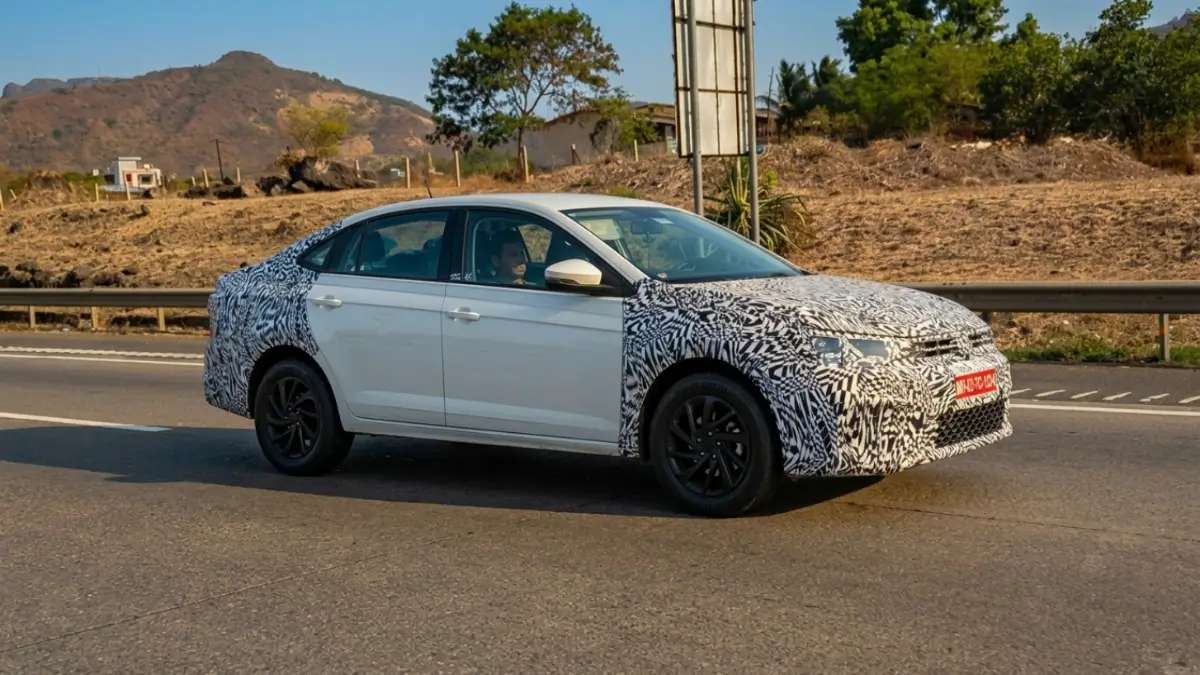
Volkswagen's best-selling sedan just got caught testing for the first time. The Volkswagen Virtus facelift broke cover in early April, wrapped in camouflage at the nose and tail, and the test car wore a black roof and red brake calipers, the giveaways of the sporty GT. So we now know roughly what's coming. But the photos reveal something more useful than fresh styling: what Volkswagen isn't changing.
What the Spy Images Show on the Volkswagen Virtus Facelift
Start with the face. The grille swaps its plain slats for a new mesh pattern, the LED headlamps and DRLs get fresh detailing, and the bumpers look reworked. Expect an illuminated Volkswagen badge up front, the same trick the new Taigun pulled.
At the back, a protrusion between the tail-lamps hints at a connecting LED light bar, with sequential indicators. New alloys feature too, and on the GT, what look like rear disc brakes sit behind those red calipers. The side profile? Untouched.
Volkswagen Virtus Facelift Features: Bigger Screens, No Sunroof
Inside, the cabin stayed hidden under wraps, which usually means a redesign. Look for a larger 10.25-inch driver's display and a 10.1-inch touchscreen with sharper graphics and an AI assistant, plus front parking sensors at last.
One thing the test mule did not have: a panoramic sunroof. So the Virtus likely keeps its single-pane unit while rivals chase the big glass roof. If you've been holding out for that sunroof, this isn't the update that delivers it.
The One Volkswagen Virtus Facelift Upgrade Worth Waiting For
Here's the part worth waiting for, if you're buying the 1.0-litre. That engine's old 6-speed automatic is set to make way for a new 8-speed unit, the same gearbox now on the Kushaq and Taigun. More gears mean lower engine speed while cruising, so you get quieter highways and a little extra mileage.
The 1.5-litre keeps its 7-speed DCT, and both engines carry over untouched: 115 PS for the 1.0, 150 PS for the 1.5. Volkswagen already dropped the 1.5 manual back in January, so that engine now comes only with the DSG.
Should You Wait for the Volkswagen Virtus Facelift?
Depends on what you're after. Want the 1.0 automatic or the newer screens? Wait, because the launch is expected in the second half of 2026, likely from around ₹12 lakh ex-showroom. For context, today's Virtus runs from ₹10.50 lakh to ₹19 lakh, ex-showroom.
Everyone else can buy today with a clear conscience. The current car already holds a 5-star Global NCAP rating, swallows a 521-litre boot, and drives like few cars at its price. The facelift sharpens the package. It doesn't reinvent it.
One more thing to track: there's still no sign of ADAS, and the Hyundai Verna has already moved ahead there. If Volkswagen skips it again, the Virtus will win on safety and driving feel, and quietly cede the spec-sheet war. Watch for the next set of spy shots to tell us which way it went.
About the Author

Bharat Rana shares practical insights on cars, ownership, and the latest updates to help readers make informed decisions.