
Which GSM Microfiber Cloth is Best for Your Car
Confused about which GSM microfiber cloth is best for car? Here's the honest, no-fluff answer, plus exactly which cloth to grab for washing, drying, glass, and interiors — so you never leave a swirl mark on your car again.


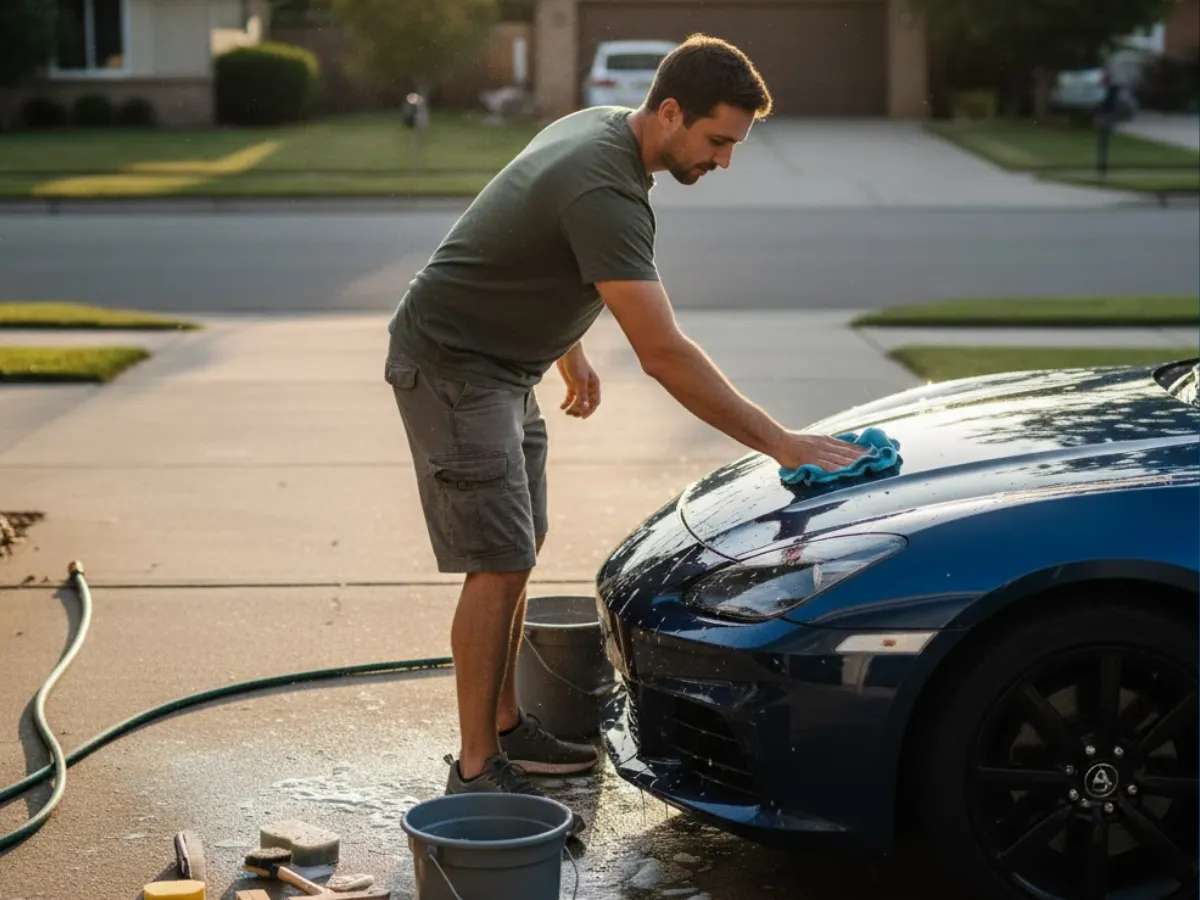
Key Takeaways
-
GSM = grams per square meter : It tells you how thick, plush, and absorbent a cloth is. Higher GSM means thicker and more absorbent; lower GSM means thinner and lighter.
-
Match the cloth to the task, not just the number : Use low GSM (200–300) for glass and interiors, medium GSM (300–400) for washing, and high GSM (400–600+) for drying and polishing.
-
The one rule to remember : wash with medium GSM, dry with high GSM.
-
GSM isn't everything : blend (80/20 for washing, 70/30 for drying/polishing) and weave (terry, waffle, plush, suede) affect scratch-safety just as much.
-
Technique prevents scratches : Wipe in straight lines (never circles), never dry-wipe a dusty car, fold into quarters for eight clean surfaces, and keep separate cloths for paint, glass, and wheels.
-
If you buy just one : Choose a 400–500 GSM cloth with laser-cut or suede edges — it handles nearly every job.
-
Care matters : Wash separately, skip fabric softener, avoid high heat, and retire any cloth that feels smooth instead of grippy.
A spotless, without even a tiny scratch "car wash" is not only about the soap or the shampoo you use. But the cloth you use to clean your car matters equally. Or I would say, the MOST.
Using a regular random cloth isn't enough. In a little slip-up, it can leave scratches on your car — the kind you only notice when sunlight hits the panel at the wrong angle and suddenly you're staring at a hundred tiny swirl marks.
But if you continue this read, you'll figure out exactly which GSM microfiber cloth is best for your car — for every cleaning job, not just one.
What is GSM in Microfiber Cloth?
GSM stands for grams per square meter. It's a simple measurement number that tells you how thick, plush, and absorbent a cloth is. A higher GSM means a thicker, heavier, fluffier cloth. A lower GSM means a thinner, lighter one.
That's the whole mystery. When someone says "500 GSM microfiber," they just mean one square meter of that fabric weighs 500 grams — so it's dense and plush. A 200 GSM cloth is thin and flat by comparison.
How GSM Affects the Cleaning of Your Car
The GSM number affects three things that matter:
-
Absorbency: Higher GSM cloths soak up more water — great for drying.
-
Softness: Plusher cloths are gentler on the paint and don't leave marks.
-
Durability: Denser cloths hold up longer wash after wash.
But here's the part most people get wrong: GSM is not the whole story. Two 400 GSM cloths can feel completely different depending on their blend and weave. More on both below — because if you only chase a big GSM number, you can still end up with a cloth that leaves scratches.
Types of GSM Microfiber Cloths for Car Washing
If someone tells you "higher the GSM number, the safer it is to use," you need to consider this: from lowest to highest, every GSM range has a job it does best. The trick is matching the cloth to the task.
Here's how I break it down.
Low GSM (200–300 GSM) – Best for Glass & Interiors
Low GSM cloths are lightweight and slightly firmer. They're great for:
-
Removing dust and dirt from interiors
-
Cleaning glass, windows, and mirrors (they dry fast and leave no streaks)
-
Pre-wash wiping of exterior surfaces
Tip: Avoid using low GSM cloths on paint during washing or drying — they're not soft enough and can leave swirl marks.
Medium GSM (300–400 GSM) – Best for Washing
Medium GSM cloths strike the balance between softness and durability. Perfect for:
-
Main washing with car shampoo
-
Wiping off excess water after rinsing
-
Everyday, safe-on-most-paint cleaning
This is the range I reach for most often during a normal wash.
High GSM (400–600+ GSM) – Best for Drying & Polishing
High GSM towels are ultra-soft and drink up water fast. They're perfect for:
-
Drying your car without leaving water spots
-
Waxing, polishing, and buffing
-
Protecting delicate clear coats on luxury cars
If you only remember one thing: wash with medium GSM, dry with high GSM.
GSM Quick-Reference Table
|
Task |
Best GSM |
Why |
|
Glass & mirrors |
200–300 |
Thin, streak-free, dries fast |
|
Interior & dashboard |
200–350 |
Light, easy to handle |
|
Washing with shampoo |
300–400 |
Soft enough for paint, durable |
|
Drying after wash |
500–600 |
Maximum absorbency, plush |
|
Waxing & polishing |
500–600+ |
Ultra-soft, safe on clear coat |
|
One all-rounder |
400 |
Handles most jobs safely |
GSM Isn't Everything: Blend and Weave
Blend Ratio (80/20 vs. 70/30)
"Blend" is the mix of polyester and polyamide in the cloth. Polyester gives structure and strength; polyamide gives softness and absorbency.
-
80/20 (80% polyester, 20% polyamide) is affordable and durable — great for general washing.
-
70/30 is softer and more absorbent — better for polishing and drying.
Avoid anything with less than 20% polyamide (like 90/10 or 100% polyester) for paintwork — those feel smooth and slick and don't lift dirt well. A quick check: run your hand across the cloth. If it grips your skin slightly, the polyamide content is good. If it feels slippery like a bedsheet, skip it for paint.
Weave and Pile (the part most people miss)
Weave is how the fibres are arranged, and pile is how long and fluffy they are. This matters as much as GSM:
-
Terry weave (loops, towel-like) — the best all-purpose option for washing.
-
Waffle weave (grid pattern) — excellent for glass and drying; soaks up water fast.
-
Coral fleece / plush (deep, soft pile) — safest for paint and ceramic-coated cars.
-
Suede / flat weave (smooth, thin) — best for applying coatings and glass polishing.
Short-pile cloths are for glass and shiny surfaces; long-pile cloths are for washing and drying.
Top Recommended GSM Ranges for Different Car Types
-
Sedans & Hatchbacks: 350–400 GSM covers washing; add a 500 GSM for drying.
-
SUVs & Larger Vehicles: 400–500 GSM for faster drying on bigger panels.
-
Luxury Cars with Delicate Paint: 500–600 GSM for maximum softness and zero scratches.
How to Use a Microfiber Cloth Without Scratching Your Car
Honestly, technique causes more scratches than the cloth itself. A few habits that saved my paint:
-
Never wipe in circles. Circular motions create swirl marks. Wipe in straight lines — front-to-back on the bonnet, top-to-bottom on doors.
-
Never dry-wipe a dusty car. Even the best cloth will drag grit across the paint. Mist with water or a quick detailer first.
-
Fold the cloth into quarters. That gives you eight clean surfaces. Once one side picks up visible dirt, flip to a fresh side.
-
Use separate cloths for separate jobs. Never use a wheel cloth on paint — wheel grit destroys clear coat. Colour-coding helps (e.g. one colour for paint, one for glass, one for wheels).
-
Pat, don't drag, when drying. Lay the towel flat and gently pull it across the panel.
For a full wash, I keep 4–6 cloths in rotation: one for the upper body, one for lower panels, one for glass, one for interior, and one or two just for drying.
Tips for Buying the Best Microfiber Cloth
-
Check the blend ratio (80/20 for washing, 70/30 for drying/polishing).
-
Consider size and edge finish. Bigger cloths (16×24 inches or 40×40 cm) cover panels faster. Choose edgeless, laser-cut, or silk-edged towels — stitched edges can drag and scratch paint around door handles and mirrors.
-
Avoid lint-prone or rough materials. Cheap microfiber sheds lint and feels scratchy. Stick to premium-grade towels from reputable brands.
-
Know when to replace it. If a cloth stops absorbing, feels smooth instead of grippy, or starts fraying, retire it from paint duty — a worn cloth can actually cause scratches.
Recommended Microfiber Cloths
I've been using these two brands for almost 3 years and they've never let me down.
-
ShineXPro — their 500 GSM cloth with suede edging is my go-to for scratch-free drying and detailing.
-
Softspun — their 340 GSM cloth is a reliable, affordable pick for everyday washing.
Both are trusted by thousands of car owners (along with me) and are available on Amazon. If you're buying just one, get a 400–500 GSM with laser-cut or suede edges — it'll handle nearly everything.
Caring for Your Microfiber Cloths
Proper Washing & Drying
-
Wash separately from regular laundry (cotton lint clogs the fibres).
-
Use cold or lukewarm water and a mild liquid detergent — no fabric softener (it coats the fibres and kills absorbency).
-
Air-dry when possible. Never use high heat, which melts the fibres.
-
Wash wheel/engine cloths separately from paint cloths.
Storage for Longevity
Store clean cloths in a sealed, dry container or zip-lock bag to keep dust off and preserve softness.
About the Author

Bharat Rana shares practical insights on cars, ownership, and the latest updates to help readers make informed decisions.